7 Dryer Vent Myths That Keep Lint Where It Doesn't Belong
The lint screen catches it all, foil duct is fine, a screen keeps critters out. Common dryer vent myths and what fire safety guidance actually says.
Most people learned how to use a dryer by watching someone else do it. Along the way, a few ideas got passed down that sound reasonable but don't hold up. Some are harmless. Others leave lint building up in the vent where you can't see it.
Here are seven common dryer vent myths we hear from homeowners in Fernandina Beach and around FL, and what fire safety guidance actually says.
Myth 1: "The lint screen catches all the lint"
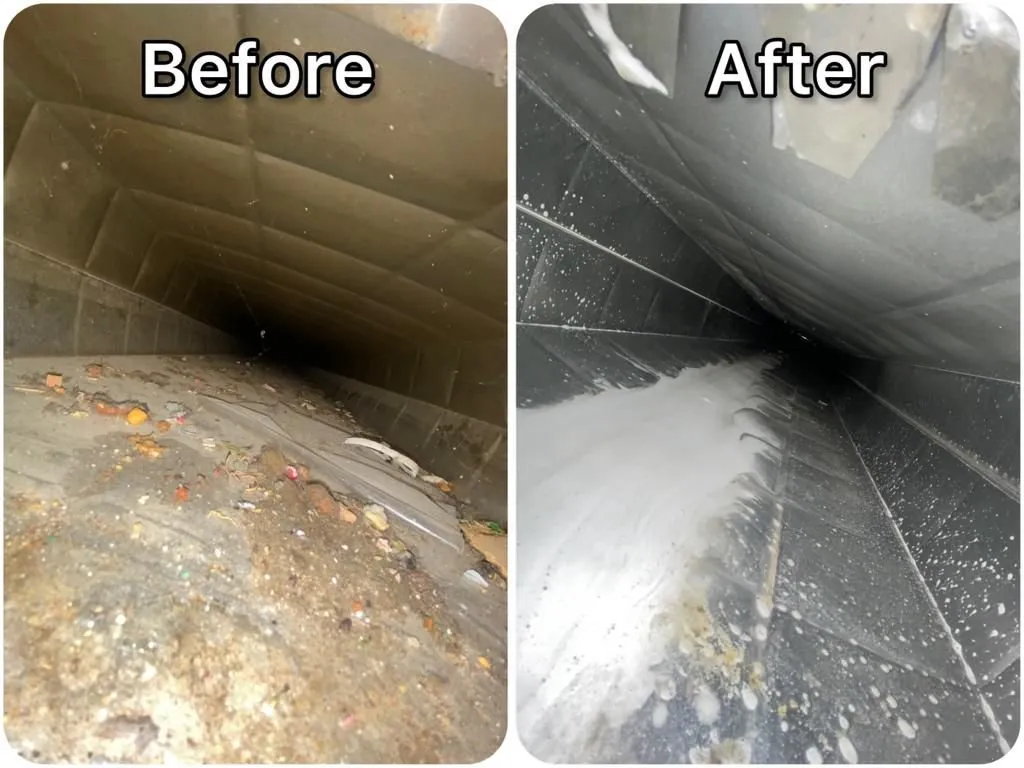
The lint screen catches a lot, but not everything. Some lint passes through and travels with the hot, moist air into the vent. Over time, it builds up along the inside of the duct and at the outside hood.
That's why fire safety guidance from the NFPA, published by the U.S. Department of Energy, recommends cleaning lint out of the vent pipe once a year, or more often if clothes are taking longer than normal to dry, in addition to cleaning the lint screen before or after each use.
Myth 2: "If the dryer still runs, the vent is fine"
A dryer will usually keep running with a partly blocked vent. It just takes longer. Manufacturer support pages, such as Whirlpool's, note that dryers keep running even when a restricted airflow warning is on.
The U.S. Fire Administration notes that if heavy items like towels or jeans take a long time to dry, or clothes feel hotter than usual at the end of the cycle, a clogged vent is likely the problem. Slow drying is a sign to check the vent, not just a quirk of an older dryer.
Myth 3: "Any duct behind the dryer will do"
White plastic and thin foil accordion ducts are still common behind dryers. The USFA recommends replacing coiled-wire foil or plastic venting with rigid, non-ribbed metal duct, and notes that manufacturers state in their manuals not to use plastic flexible ducts. Fire safety guidance from the NFPA says rigid or flexible metal venting material should be used.
Myth 4: "A screen on the outside vent keeps critters out"
It's tempting to cover the outside opening with mesh. But the USFA says not to use wire screen or cloth over outside wall dampers, because these can collect lint and clog the vent. A proper hood with a working flap is the better approach, along with checking periodically that nests aren't blocking it.
Myth 5: "Venting into the garage or attic is fine"
Some older or DIY installations end the dryer duct in an attic, crawl space or garage. The USFA notes that building codes require dryers to exhaust directly to the outdoors, and that venting into attics, soffits, ridge vents or crawl spaces is expressly prohibited. If your vent doesn't clearly end outside, have it checked and corrected by a contractor.
Myth 6: "Only big families need vent cleaning," and Myth 7: "Cleaning the hose is enough"
A small household runs fewer loads, but lint still builds up, and the NFPA's once-a-year guidance applies to everyone. Watch drying times as your real guide.
As for the hose: pulling the dryer out and cleaning the transition duct is a good habit, and the USFA recommends cleaning behind the dryer where lint builds up. But the vent continues through the wall, floor or ceiling to the outside. Lint collects along that whole run and at the hood, which is where a full cleaning matters.
Instead of the myths, here's a routine that matches the guidance:
- Clean the lint screen before or after every load, and never run the dryer without it.
- Pull the dryer out every few months and vacuum behind it.
- Make sure the connector is metal and not crushed. The USFA also recommends checking that the venting behind the dryer isn't damaged or restricted.
- Walk outside while the dryer runs and confirm the flap opens.
- Don't leave the dryer running when you leave home or go to bed, as the NFPA tip sheet recommends.
- Have the full vent cleaned at least once a year, or sooner if drying slows down.
Our dryer vent cleaning cleans from the dryer connection through to the exterior hood. It's $99 to start, covering up to 10 feet of vent, plus $15 per additional foot, with an inspection included. We check that the outside flap opens and closes and tell you if we see a plastic or crushed connector.
Our service areas page lists the towns we cover around Fernandina Beach.
If your dryer has been slowing down, Yona Air Duct Cleaning Fernandina Beach can take a look. Our full prices are on the pricing page.
Sources
- Clothes Dryer Fire Safety, U.S. Fire Administration, accessed October 22, 2026
- Clothes Dryer Fires in Residential Buildings (2008-2010), Topical Fire Report Series Vol. 13, Issue 7, U.S. Fire Administration, August 2012
- Clothes Dryer & Washing Machine Safety, NFPA, published by the U.S. Department of Energy, accessed October 22, 2026
- AF or "Check Vent" - Dryer, Whirlpool Product Help, updated June 16, 2025