Ducts in Historic Homes: What Retrofitted AC Means
Many older houses near downtown Fernandina Beach got central air decades after they were built. Here's how retrofit ductwork differs and how to care for it.
Walk a few blocks from Centre Street and you'll pass houses with deep porches, tall windows, wood siding and steep roofs. They were designed long before anyone imagined central air conditioning. Shade, cross breezes, high ceilings and transoms did the cooling. Today most of those homes have a modern system, but it was added later, and that history shows up in the ductwork.
If you own an older house in or around Fernandina Beach, this guide explains what a retrofit system usually looks like, the problems we tend to find, and what you can do between cleanings.
Why a retrofit system is different
When a home is built with central air in mind, the builder plans space for the air handler, trunk lines and returns. In a house that predates air conditioning, the installer has to fit everything into spaces that already exist. That leads to a few common patterns:
- Ducts in tight attics or crawlspaces. Runs are often squeezed between rafters, joists or old knob-and-tube paths that were later abandoned.
- Flexible duct instead of rigid metal. Flex is easier to snake through a finished house, but it can sag, kink or get crushed during later work.
- A single central return. Many retrofits rely on one big return grille in a hallway, sometimes undersized for the system.
- Registers in unusual spots. Floor registers in older rooms, or ceiling registers added through plaster, are typical.
- Patches from several eras. A house may have had two or three system replacements, each leaving a different mix of fittings and duct types.
None of that means the system is bad. It just means it deserves a closer look than a builder-grade system in a newer subdivision.
What tends to collect inside
Older houses breathe more than new ones. Gaps around original windows, wood floors and chimneys let outside air in, and with it comes pollen, fine sand and the moisture that comes with living on an island. That air finds its way to the return.
In retrofit systems we often see:
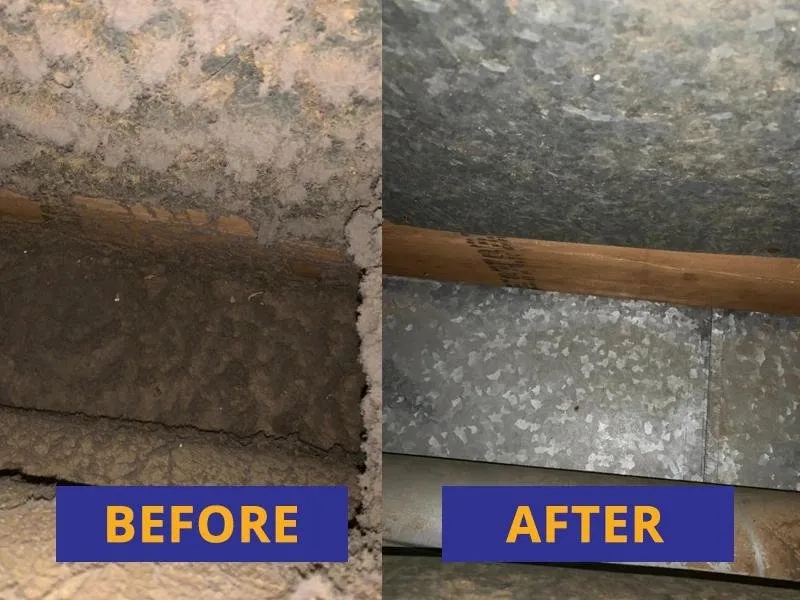
- Plaster and lath dust left from cutting openings for registers, sometimes years ago
- Debris from renovations, like sawdust and paint flakes, when a room was redone while the system ran
- Heavy dust at the single return, because all the house's air is pulled through one spot
- Insulation fibers where duct joints have loosened in a hot attic
If your house has a crawlspace with ducts beneath the floor, humidity and the occasional pest can also play a part.
Signs it's time for a cleaning
You don't need to clean ducts on a fixed schedule. Watch for things that tell you buildup is real:
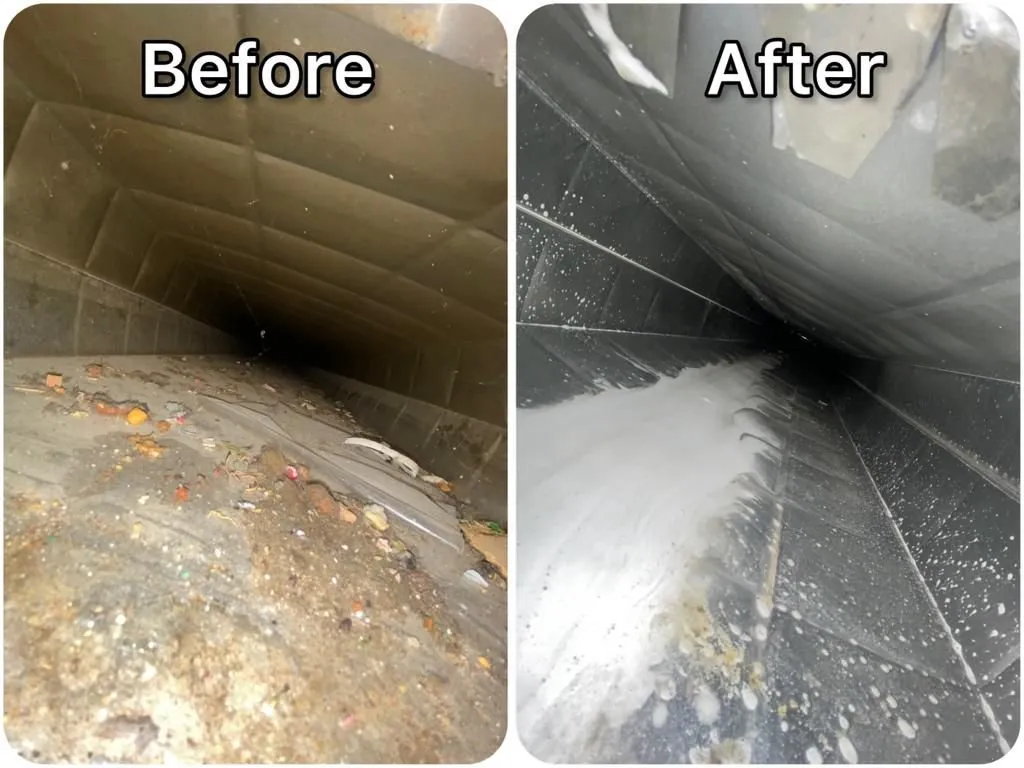
- Dust streaks on the wall or ceiling around supply registers
- A return grille that turns gray again soon after you wipe it
- Debris you can see when you lift a floor register
- New dust after any renovation, roof work or plaster repair
- Rooms that feel stuffy even when the thermostat is satisfied (this can be a duct problem, so mention it)
How we approach an older house
Our technicians start by finding every supply and return, since registers in older homes aren't always where you'd expect. We protect floors and furniture, then work run by run with roto-brushes and HEPA-filtered vacuums. With flexible duct in an old attic, we take care not to tear or pull apart connections that are already fragile.
When we see damage, such as a crushed run, a joint that has separated or a register boot that is no longer attached, we'll point it out and explain what we see. Duct repair and sealing is a job for an HVAC contractor, so we'll point you in that direction rather than guess.
Most single-system homes in the historic area fit our air duct cleaning service: $199 for up to 10 vents, plus $29 for each extra vent. Larger houses or systems with heavy buildup may need deep duct cleaning at $59.99 per vent.
Don't forget the dryer vent
Laundry rooms in older homes are often an afterthought: a back porch that was enclosed, a corner of the kitchen or a converted pantry. That can mean the dryer vent runs a long or crooked path to the outside, sometimes through a crawlspace. Lint builds up faster in those runs. A dryer vent cleaning is $99 for up to 10 feet and $15 per foot after that.
Caring for a retrofit system between visits
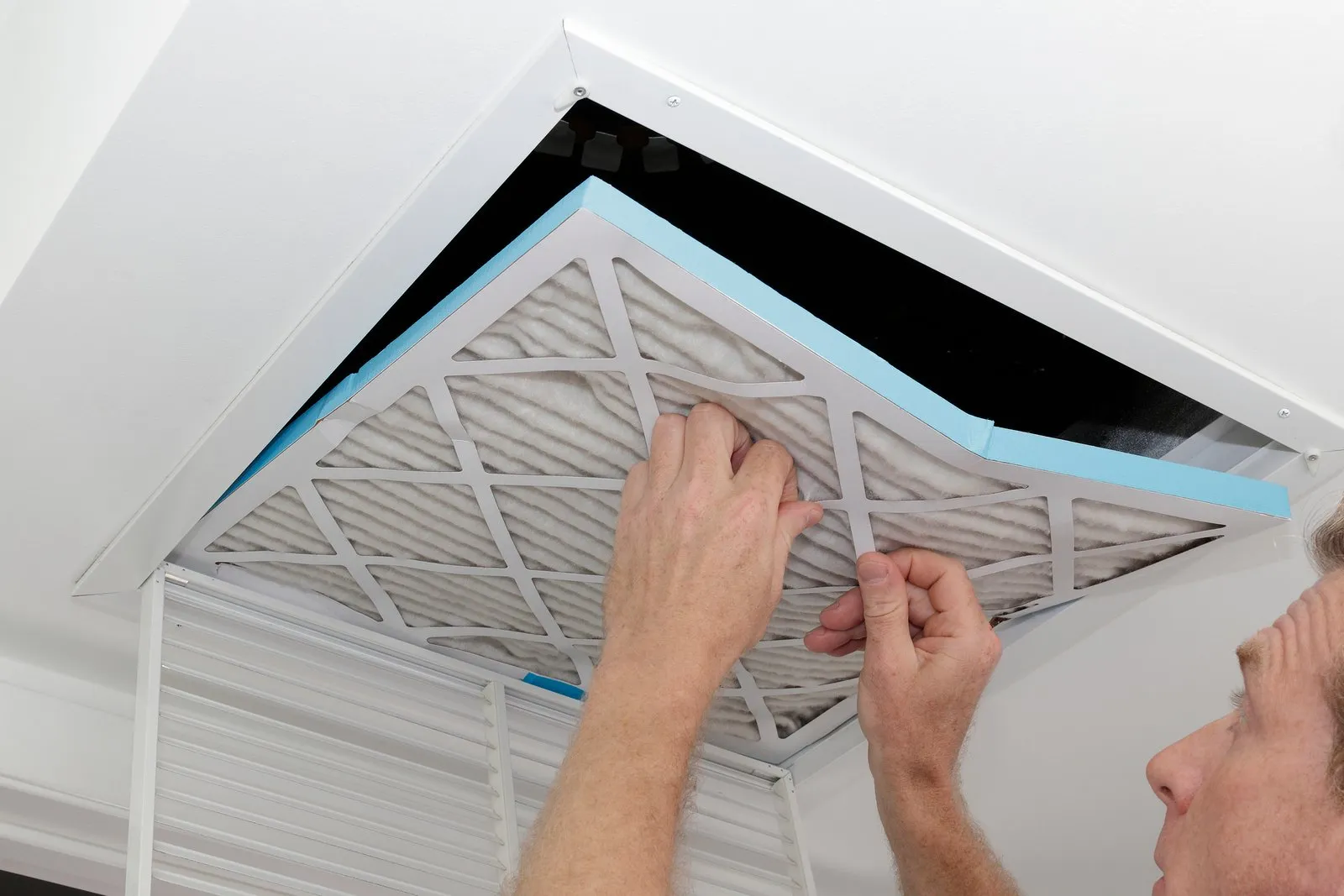
- Change the filter on time, and check that it fits its slot snugly with no gaps around the edge.
- Keep the main return clear. Don't park furniture or rugs in front of it.
- Seal off rooms during projects. Turn the system off or cover registers when sanding, scraping paint or cutting plaster.
- Look under the house now and then, if you have a crawlspace, for duct that has fallen or disconnected.
- Ask your HVAC contractor about return sizing if one grille has to serve the whole house.
Owning a historic home in Fernandina Beach, FL comes with a bit more upkeep, but it's worth it. If you'd like us to take a look, see our pricing page or request a free estimate.